TFTUI 0.14: I Handed My Own Project to an AI for a Day
Table of Contents
I wrote TFTUI because I was tired of
terraform state list | grep. Thirty-four releases later, it is a tool other
people rely on — and also a codebase I had started to wince at whenever I opened
it.
Version 0.14 is a complete rewrite. Same application, same keybindings, same flags — entirely new internals.
I did not write it. I handed the project to Claude Code with a one-paragraph brief — “same basic logic but better code… make it secure, fast and convenient” — and spent the day directing it, running the builds it produced, and telling it what was broken. It took one day.
What the old code actually looked like
I should be honest about the starting point, because it is the whole story.
TFTUI 0.13 was one __main__.py file of 795 lines, written by me, by feel,
over three years. It held the Textual application, the argument parsing, the
Terraform subprocess calls, the state parser, the plan colouriser and the
clipboard handling. Alongside it sat a 2,875-line constants.py, which was —
almost entirely — a word list used to generate the anonymous two-word handle for
usage tracking.
There were zero tests. Not “a few tests”. Zero. The test/ directory
contained Terraform fixtures I ran by hand.
CI consisted of two workflows: one to close stale issues, one to publish to PyPI. Nothing ever ran the application before it shipped.
It worked. People used it. But every change was a small act of faith.
What 0.14 is
Claude broke the single file into layers:
src/tftui/
├── terraform/   executor, address, state, plan, client — never imports Textual
├── widgets/     state tree, searchable resource and plan panes, header
└── screens/     modal dialogs
One rule holds the whole thing together: terraform/ never imports Textual,
and the widgets never build argv. Parsing and plan colouring became pure
functions over strings, which means they can be tested directly without
rendering anything.
The numbers, for the record:
| 0.13 | 0.14 | |
|---|---|---|
| Tests | 0 | 406 |
| Test code | 0 lines | 3,245 lines |
| CI test jobs | 0 | 12 |
| Platforms tested | none | Linux, macOS, Windows |
| Python versions | 3.9+ | 3.10–3.13 |
| Terraform implementations | assumed | Terraform and OpenTofu, both in CI |
mypy --strict | no | clean |
Worth noting what that table does not say: the application did not get smaller. Strip out the word list and 0.13 was about 1,400 lines of Python; 0.14 is roughly 3,400. Splitting one file into layers, adding type annotations everywhere and handling the error paths properly costs lines. It buys the ability to change things without holding your breath.
406 tests across three layers: unit tests over the parsers, end-to-end tests
driving the real application through Textual’s Pilot harness, and an
integration suite running a real terraform binary against a bundled example
project.
The bugs nobody knew about
This is the part I did not expect. Writing the code down properly — with types, and then with tests — surfaced defects that had been shipping silently for months. None of them had an open issue. I did not know they were there:
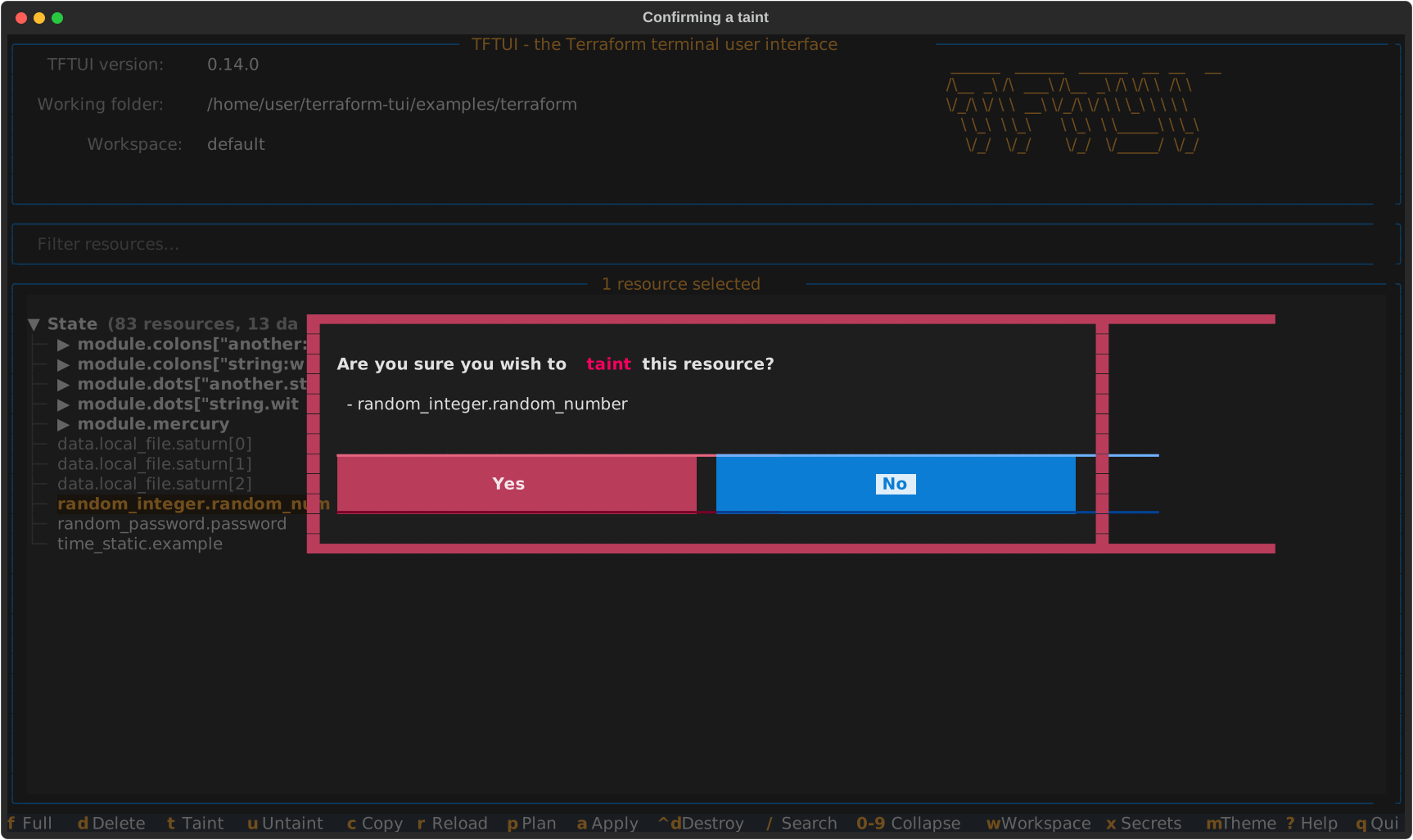
- Tainted resources rendered as ordinary ones.
- The
Rkey — refresh — did nothing at all. - Typing
jorkin the search box scrolled the tree. - The
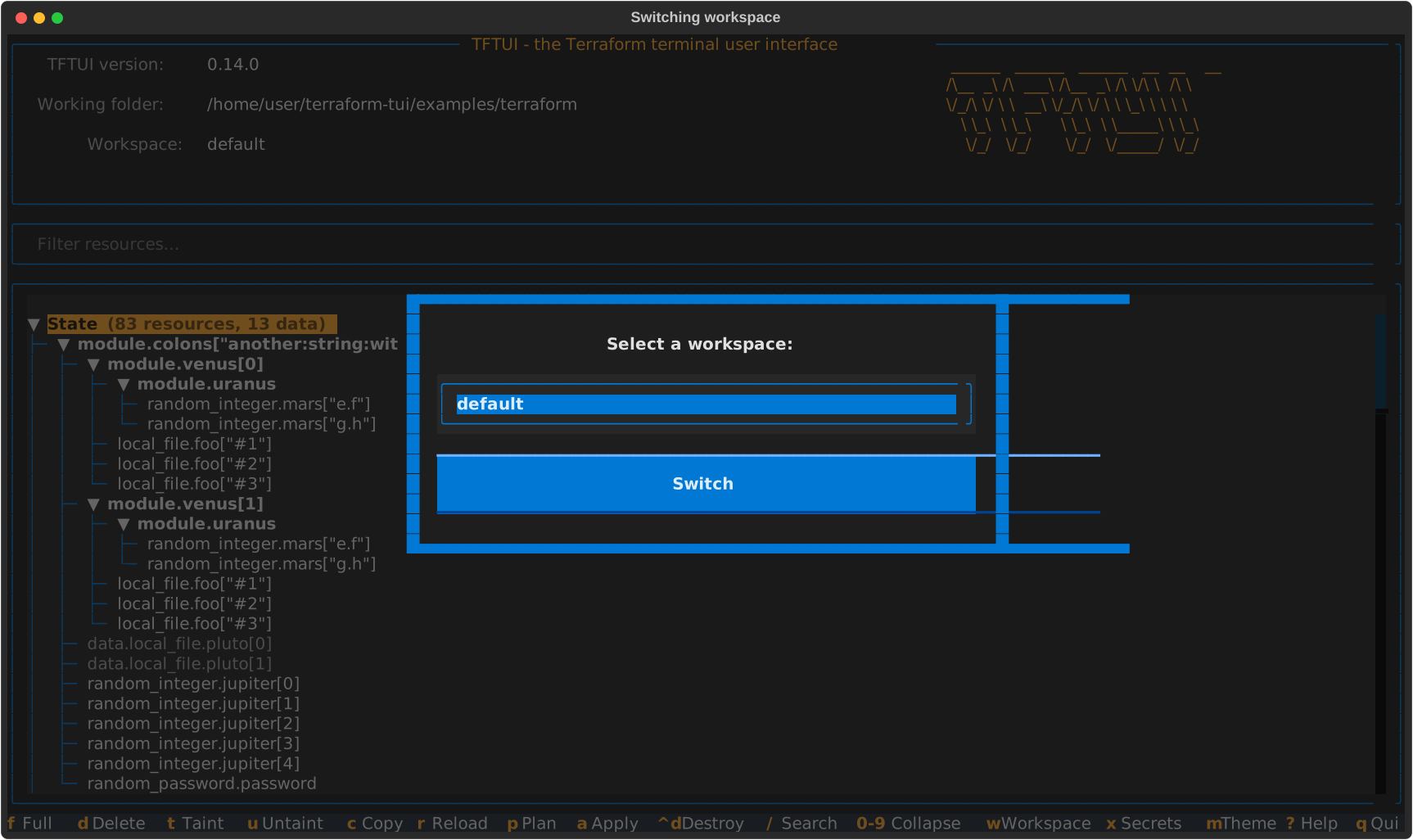
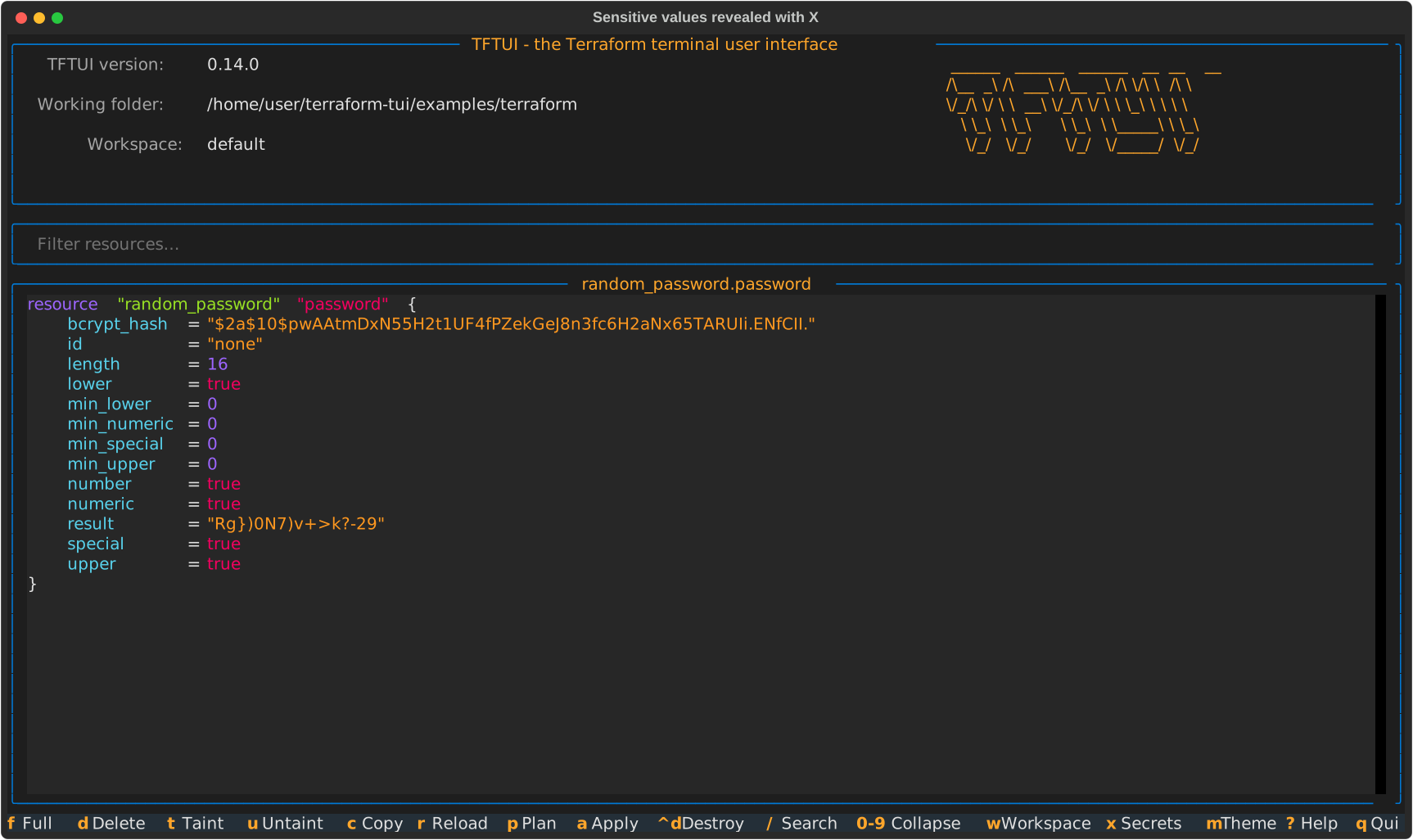
-n/--no-initflag was parsed and then ignored. - Revealed sensitive values were matched by position rather than by name.
- Selections vanished on any refresh.
- Listing workspaces raised
UnboundLocalErrorwhen the command failed.
Every one of them was found by Claude in the course of the rewrite, not by a user reporting it.
Hardening the security model
Terraform state is full of secrets, and the brief asked for secure. Four things changed.
Plan files moved out of your working directory. TFTUI used to write
tftui.plan next to your .tf files. A plan embeds resource attribute values —
including sensitive ones — so that file was one git add . away from being
committed to your repository. Plans now go to a private temporary directory
created with mode 0700, and are deleted when superseded, when applied, and on
exit.
No shell, ever. Terraform is invoked with an argument list, never through a
shell, and arguments are never re-split on whitespace. A resource address
containing spaces, quotes or $ passes through verbatim instead of becoming an
injection vector.
TF_INPUT=0 and closed stdin, so Terraform can never block waiting for input
behind the UI.
A plan is discarded once applied, so a stale plan cannot be re-applied against state that has moved on.
The features you asked for
Three long-open issues closed in this release.
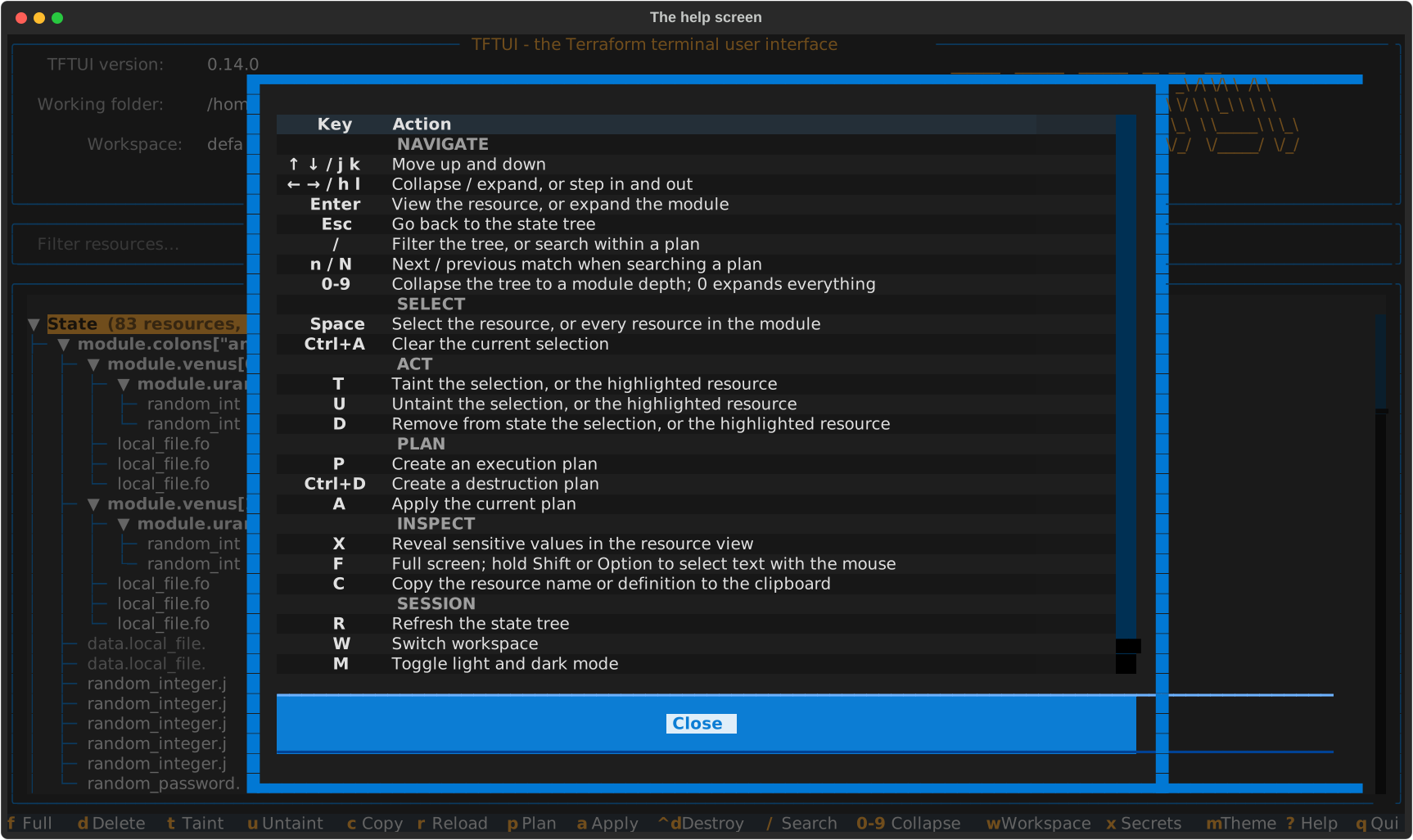
Space on a module selects everything under it (#82). Expanding moved to
Enter, the arrows, and the digit keys. The selection count now appears on the
pane border — it used to be written to a field this layout never displays, so
selecting forty resources gave you no feedback at all.
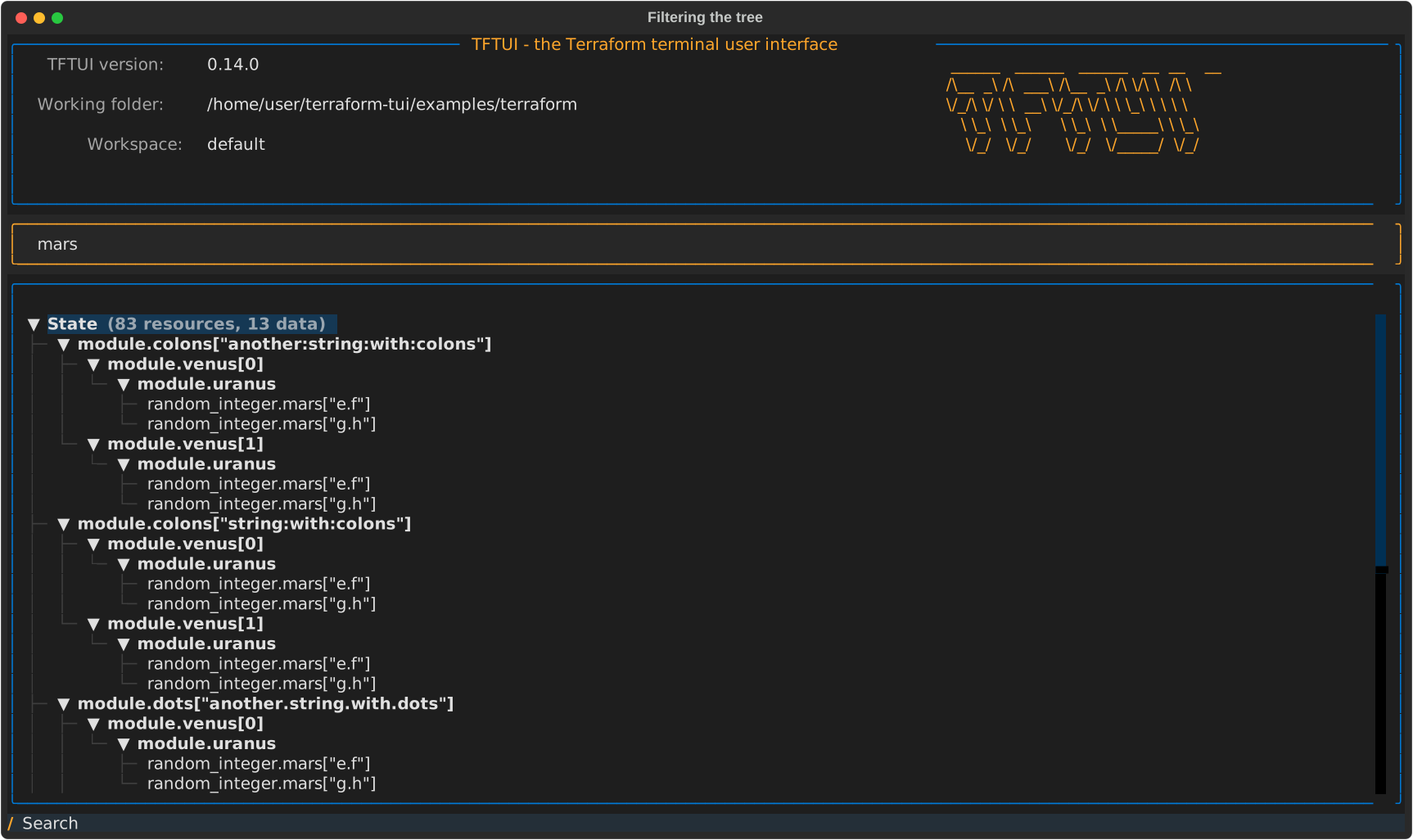
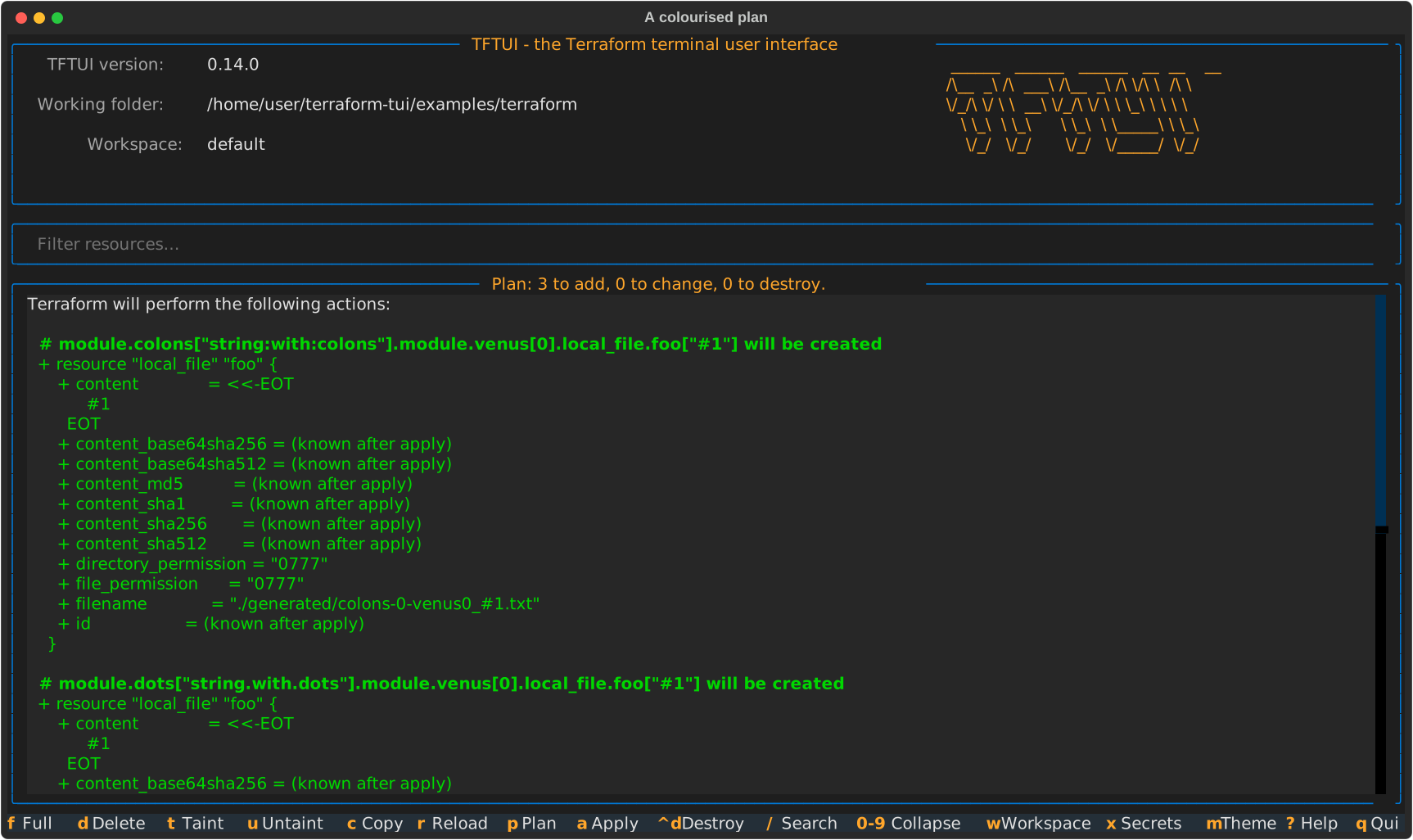
/ searches plans and resources (#89), not just the tree. In the tree it
still filters; in a plan or a resource, matches are highlighted in place rather
than filtered out — a diff without its surrounding context is not worth
searching. n and N step through them.
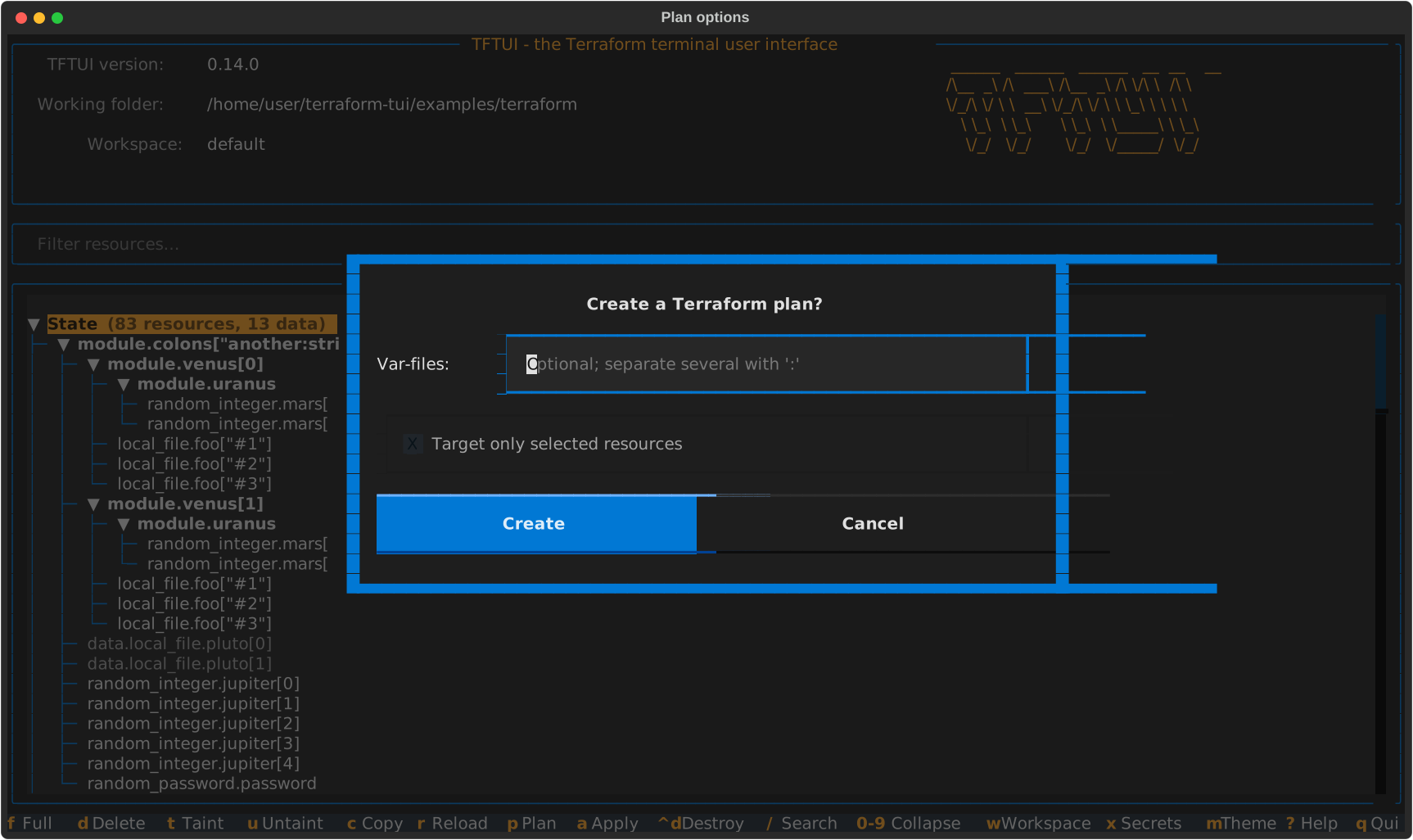
-f / --var-file can be repeated (#62, #85), applied in order, and is
passed to init as well as plan — which is what OpenTofu 1.8+ needs to
evaluate variables used in a backend block.
Plus: every flag now has a TFTUI_* environment variable, -C / --chdir runs
against another directory, Ctrl+A clears a selection, and destructive
confirmations default to No.
The honest part: it broke things too
A rewrite in a day is not a rewrite without regressions, and I want to be straight about this rather than sell a fairy tale. I ran the new build and immediately found four things wrong:
- The left and right arrow keys did nothing in the tree.
- The resource pane painted its own background, a shade off from everything around it.
- The ASCII banner came out sheared.
- Applying a plan threw you back to the state tree before you could read the output.
Each was found by using the thing, and each came back from Claude as a fix plus a test that failed against the broken code first. That last detail matters more than the fixes themselves.
CI then caught two more that neither of us would have found otherwise — both on
Windows, both predating the rewrite. --executable rejected every absolute path,
and rejected any path containing a space, which meant a Windows user could not
point TFTUI at their binary by path at all. It took having Windows in CI for
the first time to surface them.
Releases that cannot go wrong quietly
Publishing used to be: tag it, hope.
Claude replaced that with a release workflow that runs on every push to main
and starts by asking a script whether this version should ship. It ships only if
the version in pyproject.toml is absent from PyPI and newer than
everything published there. An unchanged version, a revert, a downgrade, or
PyPI being unreachable all skip the pipeline after one cheap job. It fails
closed, because a double publish cannot be undone.
When it does ship: full suite → build → confirm the installed wheel reports the expected version → TestPyPI → PyPI via trusted publishing → tag and GitHub release with notes cut from the changelog.
The first real release failed, which was satisfying in its own way: renaming the
workflow file silently invalidated the PyPI trusted publisher, which matches on
filename. Nothing was published and nothing was tagged — the gate held, the
failure was loud, and it is now documented in CONTRIBUTING.md so the next
person does not rediscover it.
So what do I actually think about the AI part?
“AI wrote my app” is both true and useless as a description, so let me be precise about what was actually impressive.
The speed was not the interesting part. The thoroughness was. Claude found the tainted-marker bug by reading Terraform’s real output format rather than assuming one. It moved the plan file after reasoning about what a plan file contains. It wrote a test reproducing a bug someone had reported in a pull request, and credited them by name in the docstring. When CI went red on Windows, it did not disable the test — it went and found the real defect.
It was also wrong sometimes, and the loop that mattered was me running the thing and saying “the arrows don’t work”. Every one of those reports came back as a fix plus a test that failed against the old code — which is exactly what I would want from a human collaborator and rarely get from myself at 1am.
The honest summary: I could have written 0.14 myself. It would have taken weeks of evenings, I would have skipped most of the tests, and I would not have found the tainted-resource bug at all.
Try it
pip install --upgrade tftui   # or: brew upgrade tftui / uv tool upgrade tftui
cd /path/to/terraform/project
tftui
Every keybinding and flag from 0.13 still works. The anonymous two-word handle used for usage tracking is derived exactly as before, so returning users keep their identity.